Who You're helping
Australian stories of living with FSHD
Mitch was diagnosed at just 18 months old
He wanted to be like other kids, and while he can imagine so many experiences, from playing sports to hopping into a car with his mates, his muscles won't let him. All Mitch and his family want is a cure: Something to stop this horrible disease in its tracks before it steals more of his life away.

Time is running out for children like Zaharrah
FSHD muscular dystrophy is devastating, slowly destroying every skeletal muscle in your body. For children with the early onset form of the disease, it can progress quickly and be even more severe.
Zaharrah wanted to learn to dance. Now she is in a wheelchair.
FSHD continues to rob too many children of the ability to run and play or dance. Many even struggle to swallow.
Zaharrah relies on a feeding tube and constant care and support from her family. Because her facial muscles are affected too, she is unable to smile or show any of the emotions bubbling away inside her.
Clinical trials for FSHD are showing promising results, but no child under the age of 16 will be able to access these treatments without vital research. That's why we need your help.
My hope is they find a cure or a treatment. Something for the little ones first. Because they are the ones affected the most, and they are the ones who succumb easier. They deserve it."
- Zaharrah's dad, Mark.
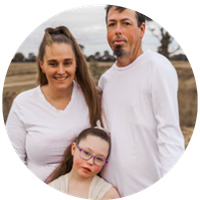
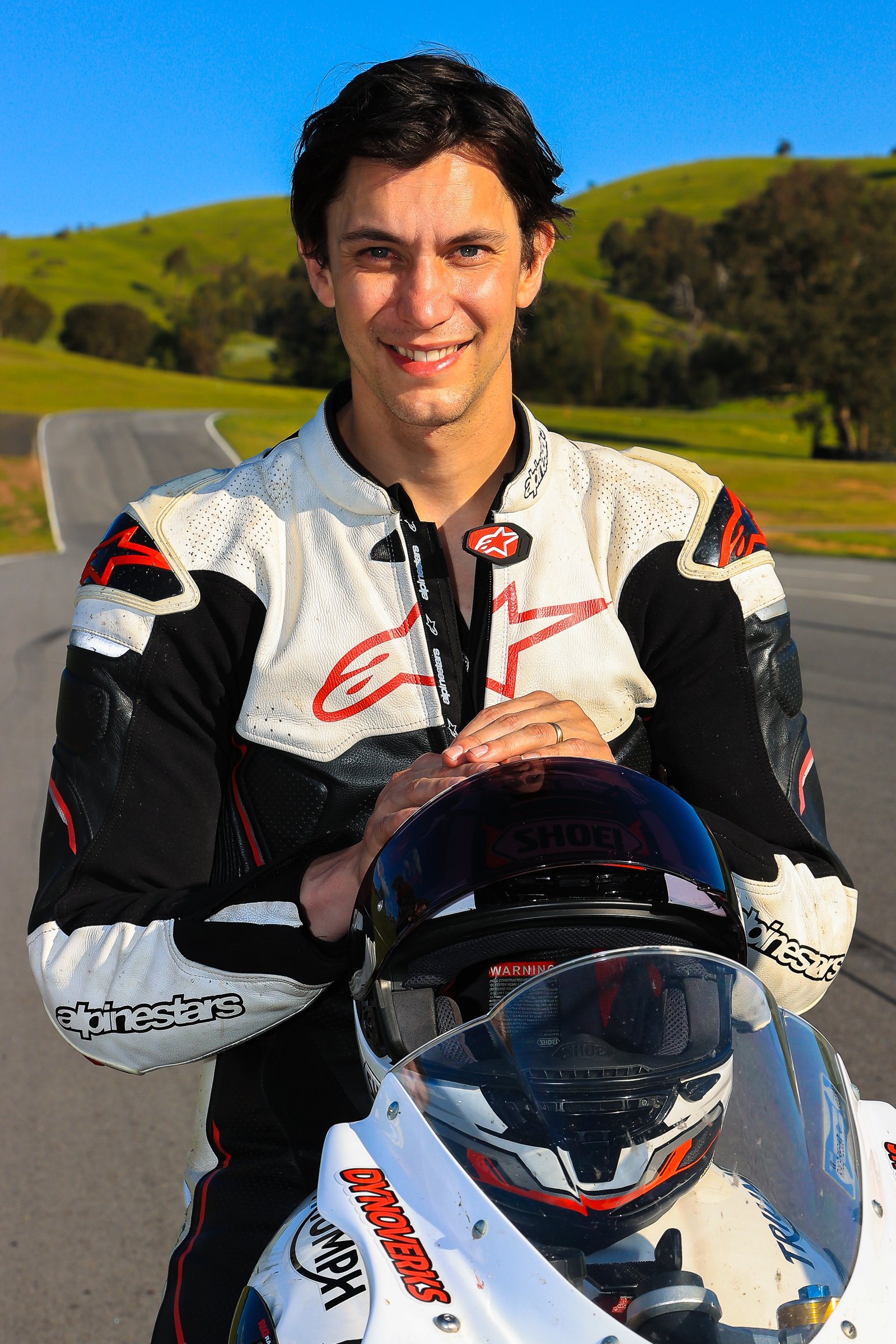
Nathan Hillman - Community Ambassador
Despite FSHD, Nathan is becoming the strongest version of himself
Nathan’s mother was diagnosed with facioscapulohumeral muscular dystrophy (FSHD), and as a precaution he and other members of his family were tested.
“I was thinking of starting a family at the time, and when I turned out to have FSHD, my partner and I chose IVF. I have three children now, the youngest just 10 months.”
Nathan is a man of many sports. Including a career in the army, he has always stayed physically active, but it is Powerlifting which he thinks can be most useful to others with FSHD.
“I'm currently attempting to get fast enough to race in the Australian Superbikes in the Supersport class (I currently do the state championship) but through my Powerlifting I hope to inspire people with the disease to stay active.”
Powerlifting Australia has no record of anyone competing with Muscular Dystrophy before Nathan, so he is a trailblazer.
Nathan Hillman started Powerlifting just a couple of years after his FSHD diagnosis. “I thought it was the best way to maintain my strength,” he says.
He was derailed by injuries, including a motorcycle accident that shattered his pelvis a year ago. Despite these setbacks, he persisted and found a coach to help him reach national competition standards. He is thrilled to have just completed his first Australian Powerlifting Federation competition, and his stats are impressive.
“I weigh 67kg and competed in the 69kg class. I can squat 150kg and deadlift 170kg. Bench press is my weakest category. I noticed that FSHD has impacted my chest muscles, as I’m only able to bench press 75kg, not the most I ever managed in my life, but at least the sport has kept my strength stable, and it hasn’t deteriorated more.”
Most people with FSHD are unable or not recommended to do squats, due to muscle asymmetries. The wider community is encouraged to take on the challenge in their honour—to build muscle for those who can’t. It’s also important to take Nathan’s advice:
“My goal is not to be the strongest, but to be the strongest version of myself.”